


Every police force, ambulance trust and fire service is being asked to deliver more with less, and to do it at greater pace. At the same time, the public rightly expects organisations to work together seamlessly rather than duplicate effort, resources or expertise.
For procurement and commercial teams, that creates a significant challenge. They are expected to make confident, timely decisions while balancing competing organisational priorities, different governance arrangements, increasing financial pressure and limited capacity. Collaboration is often presented as the answer to those challenges.
My experience suggests something slightly different. Collaboration is only valuable when it improves outcomes.
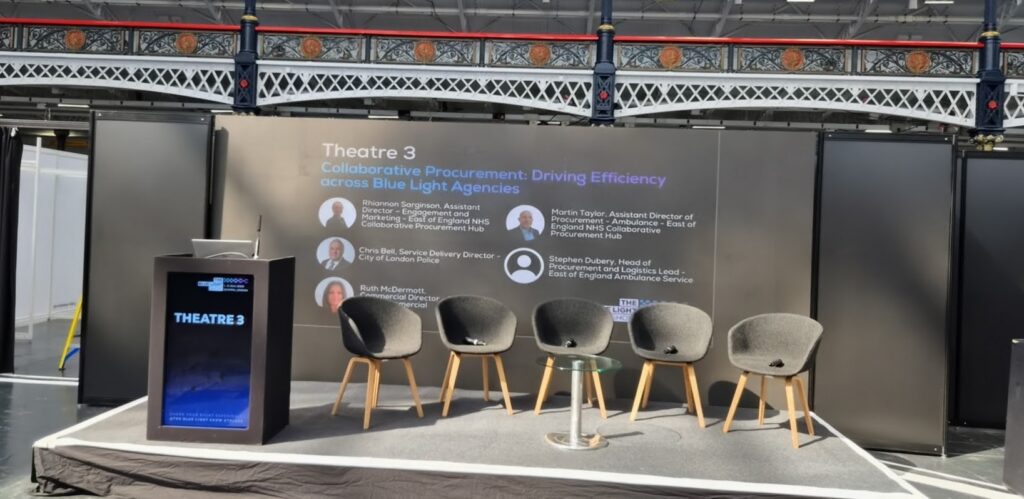
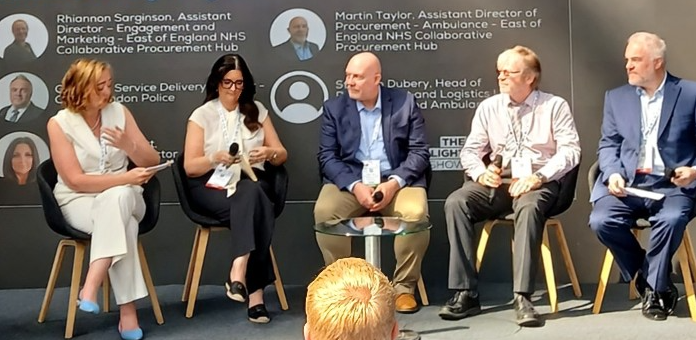
That pressure has been the backdrop to almost every conversation I’ve had this year, both inside the Hub and across the wider public sector. It was reflected in our managing director’s, Howard Rolfe’s, opening remarks at HCSA South, where collaboration was a recurring theme, and it formed the basis of the panel discussion I had the privilege of chairing at this year’s Blue Light Show.

Joining me were Martin Taylor from the Hub, Chris Bell from City of London Police, Ruth McDermott from BlueLight Commercial and Stephen Dubery from East of England Ambulance Service NHS Trust. Collectively they brought experience from policing, ambulance services, collaborative procurement and commercial leadership, with examples of collaboration that had delivered exceptional results and others that had struggled to fulfil their potential.
What are we trying to achieve together?
What really struck me wasn’t that organisations lacked the desire to collaborate. Around that table there was genuine commitment to working together. The challenge was turning that commitment into something that could withstand the reality of competing priorities, changing pressures and difficult decisions. That distinction matters.
Too often we assume collaboration succeeds because organisations agree to work together. In reality, it succeeds because they remain committed to a shared purpose long after the initial enthusiasm has faded. Without that, collaboration doesn’t stop; it simply becomes transactional, with organisations exchanging services rather than solving problems together. For me, that was one of the most important messages from the discussion.
The collaborations that delivered the greatest value didn’t begin by asking, “How will we work together?” They started by agreeing, “What are we trying to achieve together?” Once there was a genuine shared outcome, decisions became easier because they could be judged against that common purpose rather than individual organisational interests. That doesn’t remove compromise. It makes compromise easier because everyone is working towards the same destination.
Culture and leadership are only part of the picture
The panel also explored why collaboration, despite widespread support, continues to be difficult to sustain. Culture and leadership are often cited, but they are only part of the picture. Beneath them sit competing organisational priorities, different governance arrangements, varying performance measures and accountability that doesn’t always align. Those pressures don’t simply make collaboration harder. They slow decision making, create duplication, increase organisational risk and ultimately reduce the value partners could have achieved together.
Perhaps the biggest misconception, however, is what organisations need to invest. The investment isn’t simply more meetings, more governance or additional resource. It is the ongoing commitment, leadership and energy required to keep returning to the shared purpose when organisations inevitably come under pressure to prioritise their own immediate objectives.
Sustainability is the real differentiator
The most successful collaborations become embedded into everyday business rather than operating as separate initiatives – processes, governance and decision making simply become ‘how we work.’ The less successful ones often rely on the enthusiasm of a small number of individuals. Once priorities change or people move on, momentum is lost. Sustainability is the real differentiator.
Procurement frameworks and collaboration are not the same thing
Another important distinction emerged during the discussion: procurement frameworks and collaboration are not the same thing. Procurement frameworks provide compliant, efficient routes to market. They simplify sourcing, reduce duplication and help organisations access expertise and suppliers more effectively.
Collaboration, however, needs something different. It needs a clear operating model built around shared purpose, agreed principles, defined governance, mutual accountability and an understanding of how decisions will be made when pressures inevitably arise. Confusing the two risks assuming that putting organisations onto the same commercial arrangement automatically creates collaboration. It doesn’t. The commercial route enables collaboration. It doesn’t create it.
That is precisely where organisations like the Hub add value. Successful collaboration rarely sustains itself. It needs someone who can maintain momentum, remove barriers and provide an independent perspective when organisations inevitably have competing priorities. Whether that’s the Hub, BlueLight Commercial or another trusted partner, having that independent driver can often be the difference between collaboration that starts well and collaboration that delivers lasting change.
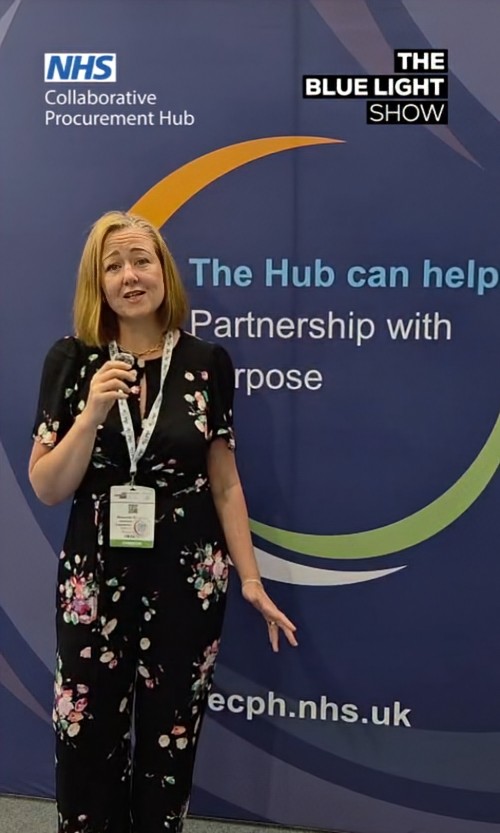

Sometimes that support comes through our procurement frameworks, providing compliant access to suppliers while reducing procurement burden. Sometimes it comes through membership, connecting organisations facing similar challenges so knowledge, experience and innovation are shared rather than recreated. Increasingly, it comes through consultancy and bespoke support, helping organisations develop collaborative approaches that are sustainable long after individual projects have concluded.
National consistency and local flexibility
We also discussed the balance between national consistency and local flexibility. This isn’t a choice between one or the other. National consistency creates confidence, efficiency and shared standards. Local flexibility ensures organisations can respond to the needs of their own communities, operational pressures and strategic priorities.
The most effective collaborations establish a consistent model for working together while allowing flexibility in how organisations achieve their shared outcomes. When everyone remains focused on the purpose rather than becoming fixed on process, compromise becomes far easier because decisions are judged against impact, not organisational preference.
Does greater consistency reduce innovation?
That naturally led to another important question: does greater consistency reduce innovation? The panel recognised that excessive standardisation can create a risk if organisations become focused purely on compliance. But there was broad agreement that consistency and innovation aren’t mutually exclusive. In fact, consistency can create the platform from which organisations innovate more effectively, provided there remains flexibility to test new approaches and learn from them.
Redefining success
Perhaps the biggest shift, however, is how we define success. Financial savings remain important, but they were never presented as the sole measure of value. The conversation repeatedly returned to broader outcomes: stronger operational resilience, faster and more confident decision making, improved supplier relationships, greater organisational capability, better joint responses and ultimately better outcomes for patients, communities and frontline services. Those are the measures that matter because they demonstrate whether collaboration has genuinely improved organisational performance rather than simply generated activity.
Practical takeaways
As we closed the session, I asked each panellist for one practical takeaway. Although each answer was different, the message was remarkably consistent: start with a shared purpose, agree the principles that will guide difficult decisions, invest in trust, commitment and relationships, not simply governance, be realistic about the effort collaboration requires and keep returning to the outcome you’re collectively trying to achieve.
If there’s one thing I’d hope readers take away, it’s this. Collaboration isn’t a soft concept or an optional extra. It is an organisational capability. Like any capability, it requires deliberate investment, sustained leadership and continual reinforcement. Not because collaboration is inherently valuable, but because when it’s done well it enables organisations to make better decisions, respond more effectively to increasing demand and deliver outcomes that none could achieve alone.
Ultimately, collaboration shouldn’t be measured by the number of meetings held or agreements signed. It should be measured by whether organisations achieve better outcomes together than they ever could alone. That’s why this conversation matters.
If we genuinely want to deliver greater value across health and blue light services, collaboration has to become part of how we work every day, not something we only return to when circumstances force us together.
It’s a conversation we’re always glad to be part of – if your organisation is thinking about what that might look like, we’d welcome the chance to talk it through.