

Neighbourhood health is moving from ambition to delivery. The Neighbourhood health framework, published by the Department of Health and Social Care and NHS England in March 2026, sets a clear direction. It also deliberately leaves much of the detail to local areas.
That flexibility is welcome. It also leaves partners with a practical question: which work is best done close to communities, which needs coordinating across a place and which benefits from the scale of a whole system?
Asking a different question
Conversations about this often start with which organisation should own a service. Sandra’s paper suggests that question can create artificial boundaries.
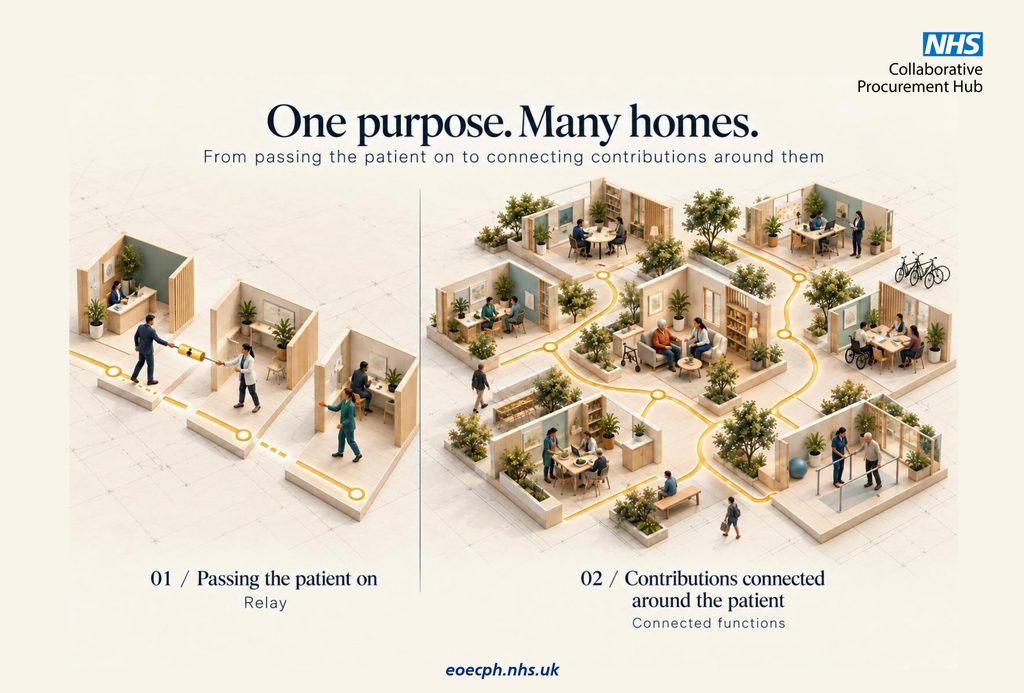
A pathway may have one purpose but many homes. Adult type 2 diabetes care illustrates this well. Some functions depend on trusted relationships close to communities, others require coordination across providers or specialist capability at scale. The challenge is understanding where each function adds most value and how those contributions remain connected.
The paper explores this through eight pathway functions, including planning, commissioning, investment, delivery, coordination and assurance. It proposes a structured way to consider their contribution across neighbourhood, place and system.
What the paper puts forward
The paper sets out:
- A shared vocabulary for neighbourhood, place and system
- Ten suggested tests to help partners decide where each function sits, from proximity and scale to equity and prevention
- An eight-step decision sequence, from defining the intended outcome to reviewing decisions as needs change
- An illustration of how the approach could apply to a diabetes pathway
- A way to map where patient and community voice enters each decision
Voice is treated as a function in its own right. The paper asks where lived experience enters a decision, how it travels between levels and how people can see its influence.
Why we’re contributing
Our work sits where commissioning, contracting and procurement meet – the point where decisions about pathways become specifications, payment approaches and contracts. That gives us a close view of how unclear boundaries can play out in practice.
A clearer, shared method could help partners spot gaps and duplication earlier and make accountability more precise. The paper is a proposal rather than guidance, and it hasn’t yet been tested on a live pathway. Its value will come from use in real pathways and from the voices brought into those discussions.
Join the conversation
The paper closes with questions for partners, including:
- Which functions genuinely need system scale?
- Where does place add integration rather than another layer?
- How will patient and community insight move between levels?
Read the full discussion paper and share your thoughts with Sandra Atik at [email protected]. If you’d like to explore applying the framework to a pathway in your area, we’d be glad to hear from you.