


The scale of the show reflected both the growing complexity of the challenges facing emergency services and the importance of collaboration in addressing them. From vehicle innovation and sustainability to workforce development, digital transformation and emergency planning, ESS provided a platform for meaningful discussion across organisational boundaries.
A showcase of knowledge and innovation
Across the two days, professionals from ambulance, police, fire and rescue, search and rescue, voluntary response organisations and the wider resilience community had access to a wide-ranging programme.
Many sessions focused on the challenges that emergency services face today, including climate resilience, workforce wellbeing, public safety, preparedness, emerging technology and organisational resilience. These themes reflected issues that increasingly affect emergency responders as they balance growing demand with changing operational environments.
The event was also co-located with The Emergency Tech Show, allowing attendees to explore developments in artificial intelligence, digital transformation, connectivity, robotics, drones and data-driven decision-making. Together, the two events demonstrated how technology is becoming increasingly embedded within emergency response and resilience planning.
What stood out at ESS was how many people were focused on the same challenges, from fleet sustainability to supply chain resilience. Bringing those conversations together helps the sector learn from one another and prepare for what’s next.
Gemma Burke, Procurement Specialist, East of England NHS Collaborative Procurement Hub
Fleet sustainability in the spotlight
For the East of England NHS Collaborative Procurement Hub (the Hub), some of the most relevant discussions took place at the Fleet of the Future stage which held a series of talks on this topic. Introduced as a dedicated stage focused on fleet resilience, vehicle performance, sustainability and emerging technologies, the programme explored how emergency services can prepare fleets for future operational and environmental challenges.
Among the sessions attended by our representative Gemma Burke were “Electric ambulances and the green surge”, presented by Alexis Percival, Energy & Sustainability Manager at Yorkshire Ambulance Service (YAS), and Chris Rutherford, Next Generation Ambulance Programme Manager at London Ambulance Service (LAS). The session focused on the practical experience of introducing electric ambulances and supporting the wider transition towards lower-emission fleets.
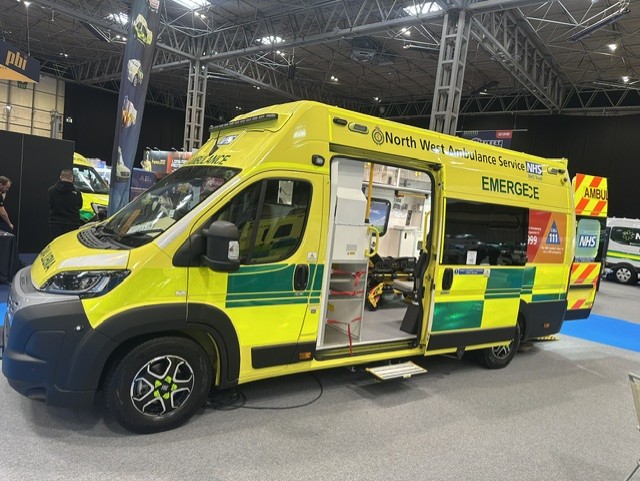
A second session, “Future gazing ambulance conversion in an unpredictable world”, featured Rob MacIntosh, Head of Fleet at London Ambulance Service and Bernadette Rhodes, Fleet Delivery and Transformation Manager from East of England Ambulance Service. The Q&A session examined ambulance conversion programmes through the lens of supply chain resilience, exploring how disruptions can affect vehicle availability and delivery times across the sector.
One particularly thought-provoking discussion raised during Rob MacIntosh’s session centred on long-term ambulance conversion capacity and how the NHS can ensure sufficient capability exists across the marketplace to meet future demand. The ideas shared during the session highlighted the strategic importance of resilience within supply chains and the need to maintain a healthy, capable supplier market.
According to Gemma, both sessions attracted strong audiences. The discussions reflected the growing importance of sustainability and fleet resilience within strategic planning across emergency services.
The realities of fleet decarbonisation
A key theme emerging from conversations throughout the event was the continued shift towards electric vehicles and the practical challenges associated with large-scale fleet decarbonisation.
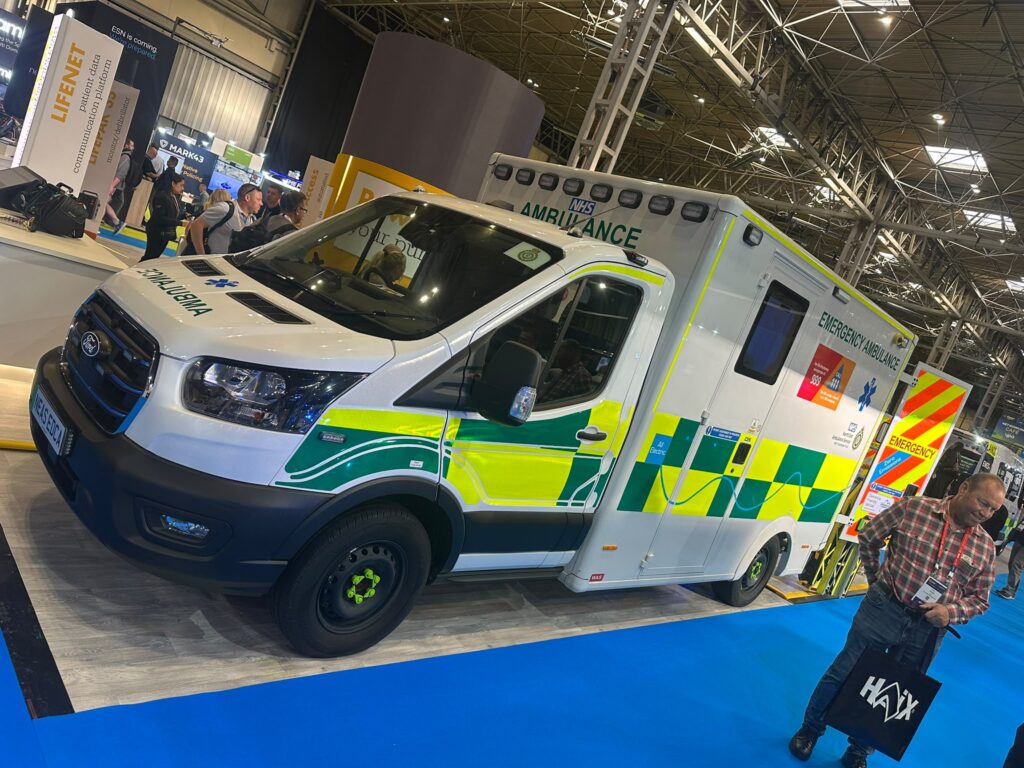
NHS England has set out a phased approach to the adoption of battery electric vehicle (BEV) ambulances. The strategy begins with trusts establishing small fleets of electric ambulances, before expanding volumes as operational experience and infrastructure grows. The roadmap proposes an initial deployment of five BEVs per trust in 2025/26, increasing to ten in 2026/27 and 20 in 2027/28. From 2028/29 onwards, trusts are expected to accelerate adoption, with 50% of annual ambulance replacements moving to electric vehicles, rising to 75% in 2029/30. Beyond 2030, NHS England’s ambition is for all new double-crewed ambulances to be battery electric vehicles.
This phased transition was a recurring theme in discussions at ESS 2026. Speakers highlighted the progress already being made by trailblazing ambulance trusts, while also recognising that organisations are starting from different positions. Charging infrastructure, geography and local operational requirements all influence how quickly trusts can progress through each stage of the roadmap. The approach therefore allows individual trusts time to evaluate existing deployments before committing to further expansion, while maintaining overall momentum towards the NHS’s long-term net zero ambitions.
The rollout of electric vehicles isn’t going to stop. The challenge now is ensuring every trust can move at a pace that reflects its infrastructure, geography and operational needs. Some services are further ahead than others, but the direction of travel is clear.
Gemma Burke, Procurement Specialist, East of England NHS Collaborative Procurement Hub
The role of the Hub
Beyond sustainability, collaboration emerged as a recurring theme throughout ESS 2026.
Conversations reinforced the interconnected nature of emergency response, where decisions relating to vehicles, equipment, technology and procurement can have significant implications for operational delivery.
These discussions closely align with ongoing work supported through the Hub’s national ambulance contracts. As Gemma puts it:
Our role is to make sure trusts have access to electric ambulance solutions and the conversion capacity they need. By maintaining those routes to market, we’re helping ensure the sector is ready when organisations choose to make that transition.
Through the availability of electric ambulance solutions and associated conversion services, the Hub’s work continues to ensure trusts have access to compliant and future-ready vehicle options as requirements evolve.
Looking ahead
ESS 2026 demonstrated that emergency services continue to operate within an environment shaped by technological change, sustainability goals, evolving operational risks and increasing expectations.
The event’s twentieth anniversary provided an opportunity not only to reflect on how the sector has evolved over the past two decades, but also to consider the collaboration, innovation and resilience that will be needed in the years ahead.
For the Hub, the discussions around electric ambulances, fleet readiness, supplier resilience and long-term capacity offered valuable insight into the priorities currently shaping ambulance fleet procurement. The conversations also reinforced the importance of maintaining strong partnerships between NHS England, ambulance trusts, suppliers and procurement organisations to ensure future requirements can be met effectively.
As emergency services continue their transition towards more sustainable, resilient and technologically enabled operations, ESS remains an important forum for sharing knowledge, strengthening relationships and exploring the solutions that will support the sector’s future success.

Contact us
The Hub is here to support that transition by helping ambulance organisations access compliant, future-ready routes to market. To discuss how our ambulance frameworks can support your plans, contact the team at [email protected].