

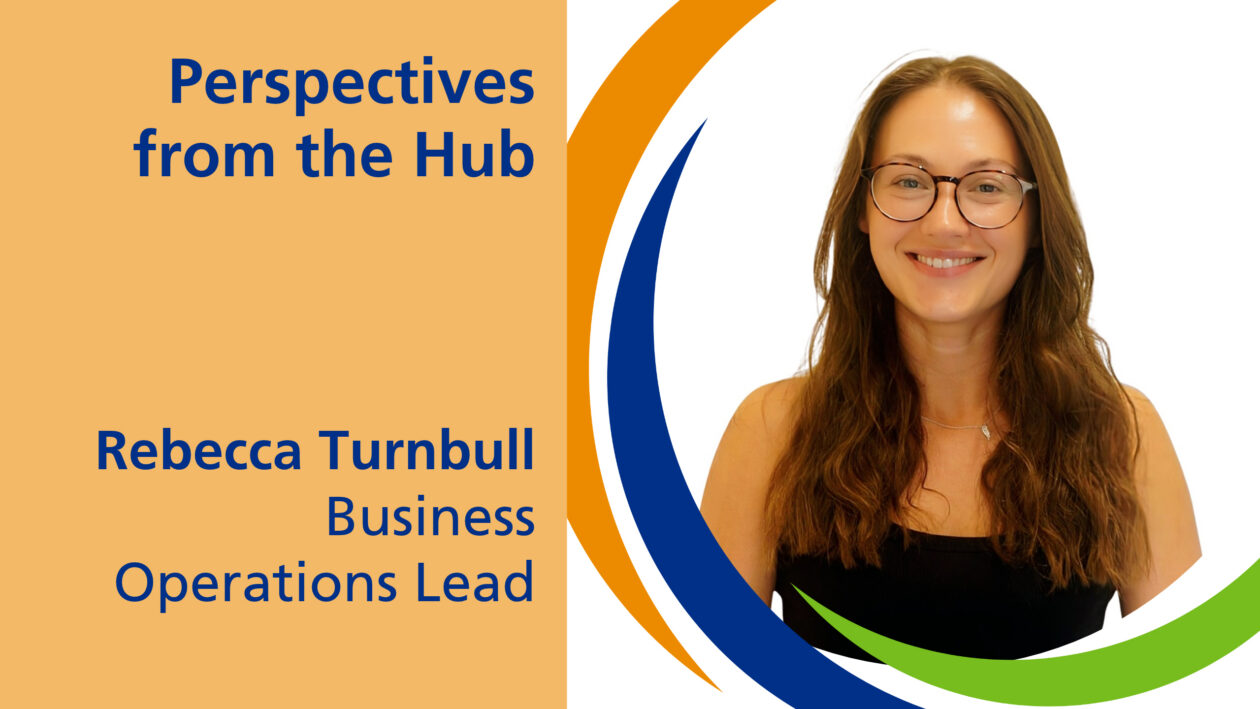
By Rebecca Turnbull, business operations lead
In September, Anamaria and I attended the Health Care Supply Association Women’s Network conference, and it was such a powerful and impactful day. One session that really stuck with me was ‘Leading when you are the only woman in the room’ by Suzanne Tracey. Her talk on leadership explored six messages that really got me thinking:
- Everyone experiences imposter syndrome
- Sometimes you have to be brave
- It’s okay to be yourself
- You can lead the room without being the room
- Less can be more
- Being kind is a superpower
It was this final message that particularly stood out to me. It made me reflect on the importance of gratitude, appreciation and kindness in our everyday working lives, and how the smallest actions can help create a more positive and connected workplace.
This message feels especially timely. Across the NHS, colleagues continue to navigate significant change, increasing pressures and growing demands on services. During times of uncertainty, it can be easy to focus solely on deadlines, targets and operational challenges. However, these are often the moments when kindness matters most, as gratitude and appreciation help people feel recognised, valued and connected to the work they do.
Gratitude and appreciation: recognising the people behind the work
For me, gratitude is about recognising the support we receive, while appreciation is about making sure people know their contributions matter. Sometimes, this can be as simple as saying thank you or taking a moment to recognise the effort that goes into a task. From working in human resources (HR), I know how far this can go with colleagues. Taking a few minutes to acknowledge someone’s hard work, thanking a colleague who has gone the extra mile or recognising the efforts of a team can boost morale and strengthen working relationships.
I first started thinking about kindness and appreciation at work before I joined the Hub in June 2023. I previously worked at Nando’s head office in Australia, and while I was living there, we did a gratitude workshop where we each had to write about what we were grateful for at work. My manager at the time wrote my name down, and I will never forget how that made me feel.
Working in operations within a procurement organisation has helped me recognise the importance of everyone’s role.
As business operations lead, I work across a range of functions, including HR, finance and operational support, and I support everyone at the Hub rather than just one team.
Whether it’s helping someone resolve an issue, supporting a recruitment process, managing a financial query or simply being available when a colleague needs assistance, I get to work with colleagues from many different teams. This gives me a unique perspective, as I see how much colleagues’ roles vary and how different their needs and demands can be.
Much of what we do relies on the knowledge and contributions of others. It’s easy to take these things for granted when we’re busy, especially when we don’t fully understand each other’s roles or what challenges others are facing that week.
At the Hub, we have an internal development group, the Uplift team, which was created to support a healthier, more connected workplace for everyone.
I believe that feeling connected at work involves more than simply working alongside one another. It’s also about recognising the people around us, appreciating different strengths and creating an environment where people feel valued. It’s about bringing people together, so they know they are not alone if they ever need anything.
I found myself leading the Uplift team, and one of the features the team introduced is the Appreciation Station. Colleagues can submit an anonymous message of appreciation for someone, which then arrives in that person’s inbox and also features on our intranet. Acknowledging someone’s contribution in this way is a small but meaningful way of showing that we value what they do.
Kindness: small actions that make a big difference
As Suzanne Tracey put it, you can lead the room without being the room. We don’t need to be the loudest person in the room or hold a senior position to have a positive impact on those around us. Sometimes, it is the small acts of kindness we show every day – taking time to listen, offering support, sharing knowledge, saying thank you or making someone feel included – that make the biggest difference.
It’s so easy to get caught up in getting through tasks and responsibilities that we forget about others, so it’s worth thinking about how we make the people we work with feel. It goes back to a quote I will never forget, which my manager, Behrooz, has shared with me, as have managers in my previous roles:
People will never remember what you said, but they will always remember how you made them feel.
That mindset feels especially important at the Hub. As a collaborative procurement hub, our work brings together different people, skills and responsibilities. Building positive working relationships is an important part of that collaboration, and gratitude, appreciation and kindness can all play a role in how we support one another.
Why connection takes more effort now
In today’s workplace, kindness can sometimes be overlooked – not because people care less, but because many of us are juggling a number of different priorities, working at pace and spending less time together face to face. With remote and hybrid working, we have fewer informal conversations and fewer opportunities to pick up on how colleagues are really doing. A quick chat in the office kitchen or a supportive word after a difficult meeting is often replaced by emails, Teams messages and back-to-back virtual meetings.
My role is fully remote, and I miss the quick chats in the office about what you’re having for dinner or how your weekend was. Sometimes you go straight from one meeting into the next, with no time for those everyday conversations.
At the Hub, Coffee Connections is one of the ways we keep that sense of connection and kindness going. Every month, colleagues are randomly paired up and try to meet in person for a coffee – in the office or elsewhere. It’s been a really great way of keeping us connected across the Hub, especially when so much of our time is spent working within smaller project groups.
Kindness in a digital workplace
Technology and artificial intelligence (AI) are helping us work more efficiently than ever, but they can never replace genuine human connection. As more of our communication becomes digital, the human factors of empathy, appreciation and kindness become even more important.
Sometimes, instead of asking a colleague for help and having a conversation, we go straight to AI – and relying on it more can sometimes make us less patient with colleagues. So next time you’re stuck, try picking up the phone or sending a colleague a quick message before you open an AI tool. You might get the answer and a good conversation as well.
Kindness can also mean being patient when someone needs help, taking the time to listen or being mindful of how we communicate when things get stressful. We don’t always know what someone else might be dealing with, and approaching people with understanding can make a real difference to their day.
Of course, being kind doesn’t mean agreeing with everyone or avoiding difficult conversations. We can still challenge ideas, give constructive feedback and have honest discussions while treating people with respect.
It’s often the everyday interactions that shape how we feel about our working environment. We might not always realise the impact we have on others, but we all have an opportunity to make someone’s day a little easier through the way we treat them.
Our part in this
I think we all have a part to play in making our workplace a positive place to be. It doesn’t mean we have to change everything overnight or get things right all the time. Sometimes, it’s just about being a bit more mindful of how we treat the people around us and remembering that everyone is different.
Creating a positive workplace doesn’t always require big gestures. It could be something as simple as thanking a colleague for their help, recognising someone’s hard work, offering support when someone needs it or taking the time to listen.
The conference reminded me that being kind really is a superpower, and it’s something we can all put into practice, whatever our role. By showing a little more gratitude, appreciation and kindness in our everyday working lives, we can all help make our workplace a more supportive and connected place to be.
What’s one small thing you could do this week to make a colleague feel appreciated?